



Some people know exactly what they want to design. Others just know they want to create something that matters. If you fall somewhere between the two, a B.Des. at CMR University Bangalore might be exactly where that clarity begins.
Design degrees have quietly become some of the most career-relevant choices a student can make today. Startups need UX thinkers. Fashion brands need storytellers who understand sustainability. Advertising agencies need people who can build visual systems, not just make things look good. And yet, most students still approach design education with one recurring question: Will this degree actually get me a job?
Established in 2021, CMR University’s School of Design, with its inbuilt programme structure, has the answer to that question.
What is the B.Des. Programme at CMR University?
The B.Des. at CMR University is a four-year full-time undergraduate programme offered across four specialisations: Communication Design, Fashion Design, Product Design and Interior Space Design. Every programme is ₹67,500 per semester and is open to students from any academic stream who have passed 10+2 or equivalent with at least 45% marks. There is no PCM requirement, which makes it one of the most accessible entry points into creative education.
Admissions to the B.Des. programmes involve completing an online application and appearing for the CMRU Design Aptitude Test (DAT). If you are exploring Design Colleges in Karnataka, you are likely comparing multiple options. CMR University also considers valid scores from recognised design entrance examinations such as NID, NIFT and UCEED. Shortlisted candidates may be required to present a portfolio and attend a personal interaction as part of the selection process.
The School is rooted in what it calls a “Theory to Practice and Practice to Theory” model. More than simply teaching a design course to students, they are expected to use it. All programmes are conceptually anchored in the United Nations Sustainable Development Goals, which means projects are not abstract exercises. They are expected to connect to real challenges in the world around you.
Communication Design: More Than Graphics
Communication Design at CMR University focuses on visual communication and how messages are built and delivered across different media. The curriculum covers typography, branding, advertising, layout design and UX design for digital experiences. Students learn to think as much as they learn to make.
What makes it worth paying attention to is the internship structure. Students complete three internships at the end of the second, fourth and sixth semesters, giving them consistent touchpoints with industry throughout the degree rather than saving it all for the final year. The Capstone Project in year four is guided by an industry partner, NGO or startup incubator, which means the degree culminates in a portfolio piece that reflects real-world collaboration rather than a classroom brief.
Communication design jobs in Bangalore have grown considerably over the last few years. With its concentration of tech companies, creative agencies and product startups, Bengaluru is one of the most active hiring cities in India for UX/UI designers, visual designers, brand strategists and content leads. Graduates from communication design programmes who enter with a strong portfolio and internship experience have a clear line into this market.
Fashion Design: Bigger Than Garments
The fashion industry today is not what it was a decade ago. It sits at the intersection of culture, business, sustainability and global retail systems. A fashion design college in Bangalore that treats the subject as purely about garment construction is behind the times. CMR University’s approach is broader.
The B.Des. in Fashion Design covers fashion history, textiles, pattern-making, garment construction, fashion sketching, draping and fashion marketing. The purpose, as stated in the programme outcomes, is to foster creativity, fashion trend analysis, alongside production skills, preparing students for careers in fashion houses, apparel manufacturing and entrepreneurship.
Like Communication Design, Fashion Design students also complete three internships across the programme and end with a Capstone Project. The school’s placement cell works with over 200 recruiters and pre-placement modules begin from the first semester, not the final year. For students asking whether a fashion design degree is worth pursuing in India today, the honest answer is that it depends far more on what you build during the degree than on the degree itself. A powerful portfolio, real internship experience and the business understanding that CMR’s curriculum builds in from year one make a meaningful difference.
Fashion Design vs. UX Design: The Question Students Actually Ask
This comparison comes up in almost every design counselling conversation. Both disciplines are growing. Both are in demand in Bengaluru. The difference is in the kind of work and the kind of thinking each requires.
Fashion design is physical and material. You are working with fabrics, silhouettes, production timelines and the cultural context of clothing. The satisfaction is tangible. You see, touch and feel what you made. It suits people who enjoy the craft of making alongside the strategy of design.
UX design, which sits within communication design, is about how people interact with products, trending digital services and systems. It is less about the object and more about the experience of using it. The work involves research, wireframing, testing and iteration. It suits people who enjoy understanding behaviour as much as they enjoy building things.
At CMR University, these two paths share the same design-thinking foundation on the same campus. Fashion students learn branding. Communication design students learn about user behaviour and product thinking. The school treats overlap as an asset, not a complication, which reflects how the industry itself is moving.
The Learning Environment at the School of Design
The three pillars of the B.Des. programme at CMR University are core design training, soft and leadership skills development and career readiness. These are not separate tracks. They run through every semester simultaneously.
From the first semester, students begin pre-placement modules designed to build employability gradually rather than cramming it into the final year. The Department of Common Core Curriculum (DCCC) adds client presentation workshops and project management simulations, which mirror professional studio practice. Regular exhibitions, public juries and design expos give students visibility and critical feedback from practising professionals throughout the degree.
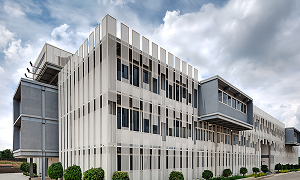
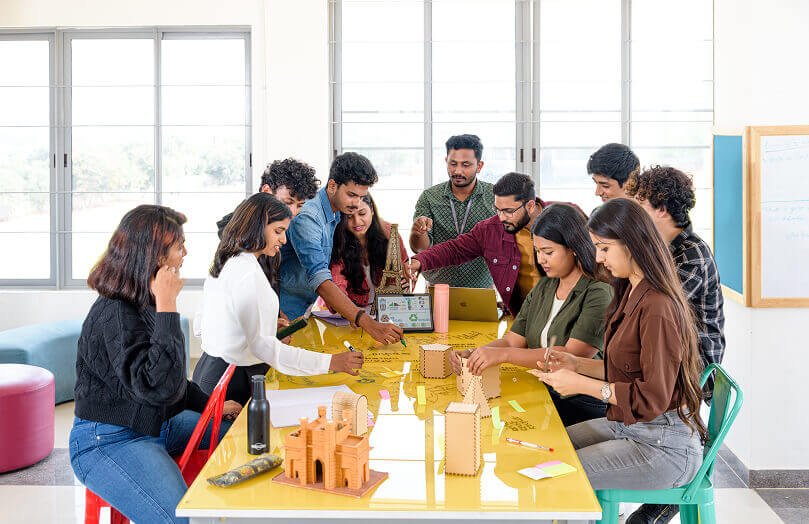
The Lakeside Campus, which houses the School of Design, offers MakerSpace and Design Thinking Lab access to its students, shared with the School of Architecture. This creates natural opportunities for cross-disciplinary work that goes beyond the boundaries of a single specialisation.
The school prepares students for four possible outcomes: employment, further studies in India or abroad, entrepreneurship and academic research. With over 200 recruiters visiting the campus and a placement support structure that begins in year one, the emphasis on career readiness is genuine rather than performative.
Is B.Des. Worth It in India Today?
This is the question most students eventually get to, and it deserves a direct answer.
Yes, a B.Des. is worth pursuing in India in 2025, with one important condition: the degree rewards those who actively build during it. A student who completes three internships, develops a focused portfolio, engages seriously with the Capstone Project and uses the placement modules will leave with considerably more than a certificate. A student who treats it as a passive experience will not.
The demand for designers in India is real and growing. Companies across every sector, from fintech to healthcare to retail, are investing in design. Communication design jobs in Bangalore alone have expanded with the city’s startup and tech ecosystem. Fashion design graduates with business insight and strong portfolios are finding roles not just in garments but in retail strategy, sustainable fashion and brand communication.
For students comparing design colleges in Karnataka for UCEED preparation and beyond, CMR University positions itself with a curriculum that is genuinely industry-connected, a campus that supports hands-on making and a school that has built its reputation on the outcomes of its graduates rather than on legacy.
How to Apply
Candidates can apply online through the CMRU admissions portal. The process involves completing the application form, uploading a portfolio and completing the CMRU DAT. Scores from NATA, NID, NIFT and UCEED are also accepted. The application fee is ₹1,000. Admission is offered on a first-come, first-served basis after the DAT is cleared.
FAQs
- What is the eligibility for B.Des. at CMR University?
Candidates must have passed 10+2 or equivalent from any recognised board with at least 45% marks. Students from all academic streams, including Science, Commerce and Arts, are eligible. - What is the fee for B.Des. at CMR University? The fee is ₹67,500 per semester for all B.Des. programmes.
What entrance exam is required for B.Des. admission at CMR University? Students complete the CMRU Design Aptitude Test (DAT) as part of the application process. Scores from NATA, NID, NIFT and UCEED are also accepted. There is no separate fee for the CMRU DAT. - What is the difference between Fashion Design and Communication Design at CMR University?
Fashion Design focuses on garment creation, textiles, pattern-making, fashion history and fashion marketing. Communication Design focuses on visual communication, typography, branding, UX/UI design and digital media. Both are four-year programmes with the same fee structure and similar internship and placement support. - What career paths are available after B.Des. from CMR University? Communication Design graduates can pursue careers as UX/UI designers, visual designers, brand strategists, art directors or creative directors. Fashion Design graduates can enter apparel design, fashion marketing, styling, retail and merchandising, or build their own label. Both paths also lead to postgraduate study in India or abroad.
- Is B.Des. worth pursuing in India in 2025?
Yes, particularly for students who invest in their portfolio and internship experience during the degree. Design is one of the fastest-growing professional fields in India, and Bengaluru in particular offers powerful employment opportunities for design graduates across both digital and physical design disciplines.
Conclusion
Not every aspiring designer starts with a sketch. Some start with a question: what do I want to change? Choosing a B.Des. at CMR University is about deciding what kind of problems you want to spend the next four years learning to solve.
Whether you are drawn to fashion or communication design, both programmes are built around the same conviction: that design education only has value when it connects to the real world.
With three internships built into the degree, a Capstone Project shaped by industry and a placement structure that begins from semester one, CMR University’s School of Design makes that connection practical rather than just promised.