
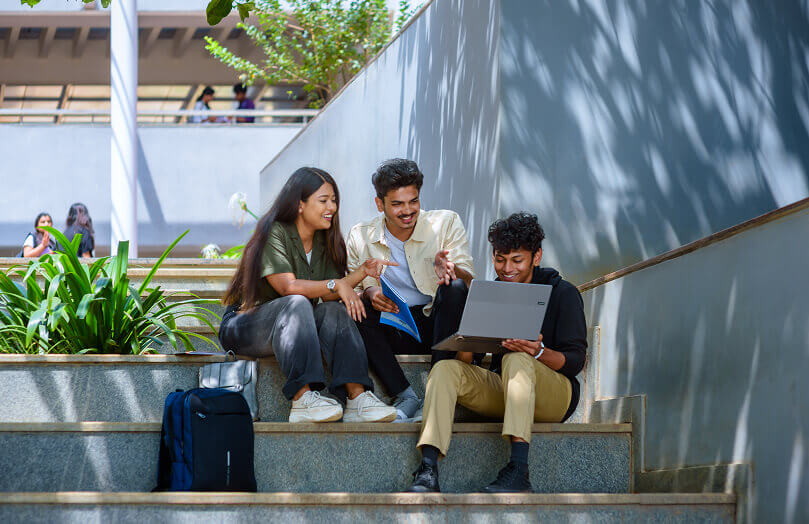
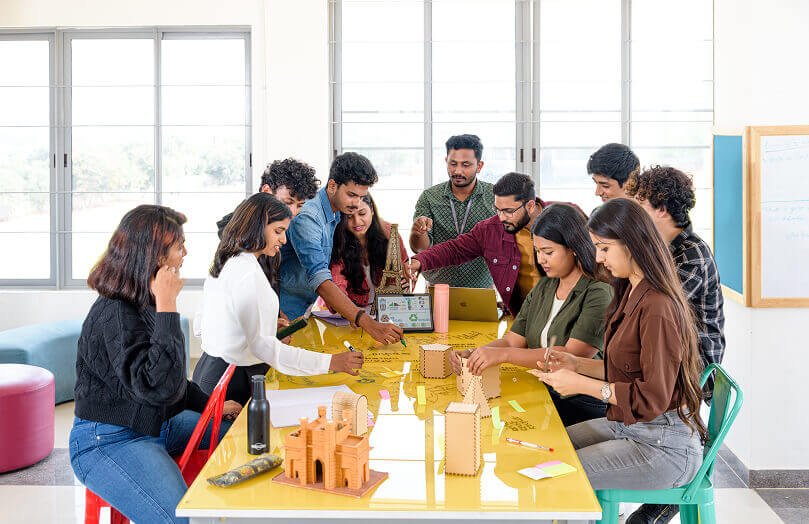
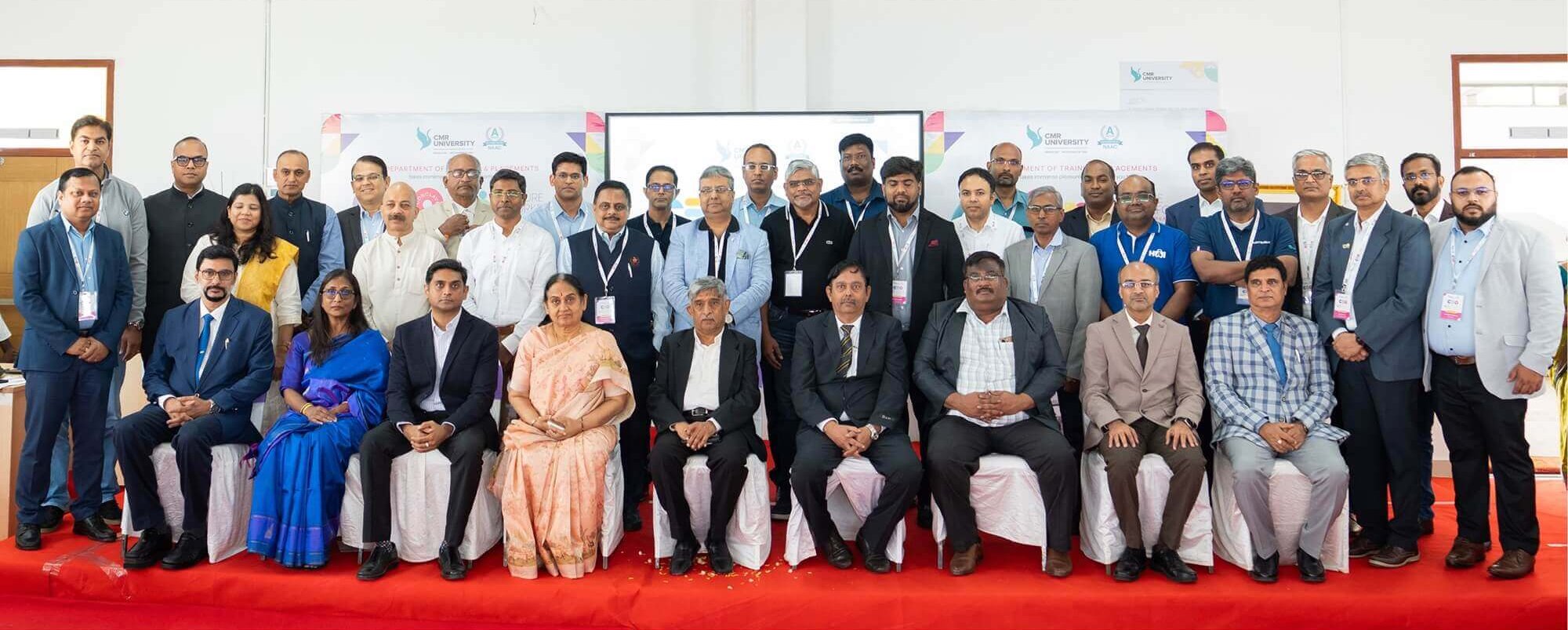
Picture over 52 CEOs, founders and business leaders walking into a university auditorium on a Saturday morning, not to recruit, but to talk. This happened at CMR University’s Lakeside campus on 25th July 2026, when the CEO Conclave brought industry and academia into the same room for a conversation that usually happens in boardrooms, not classrooms.
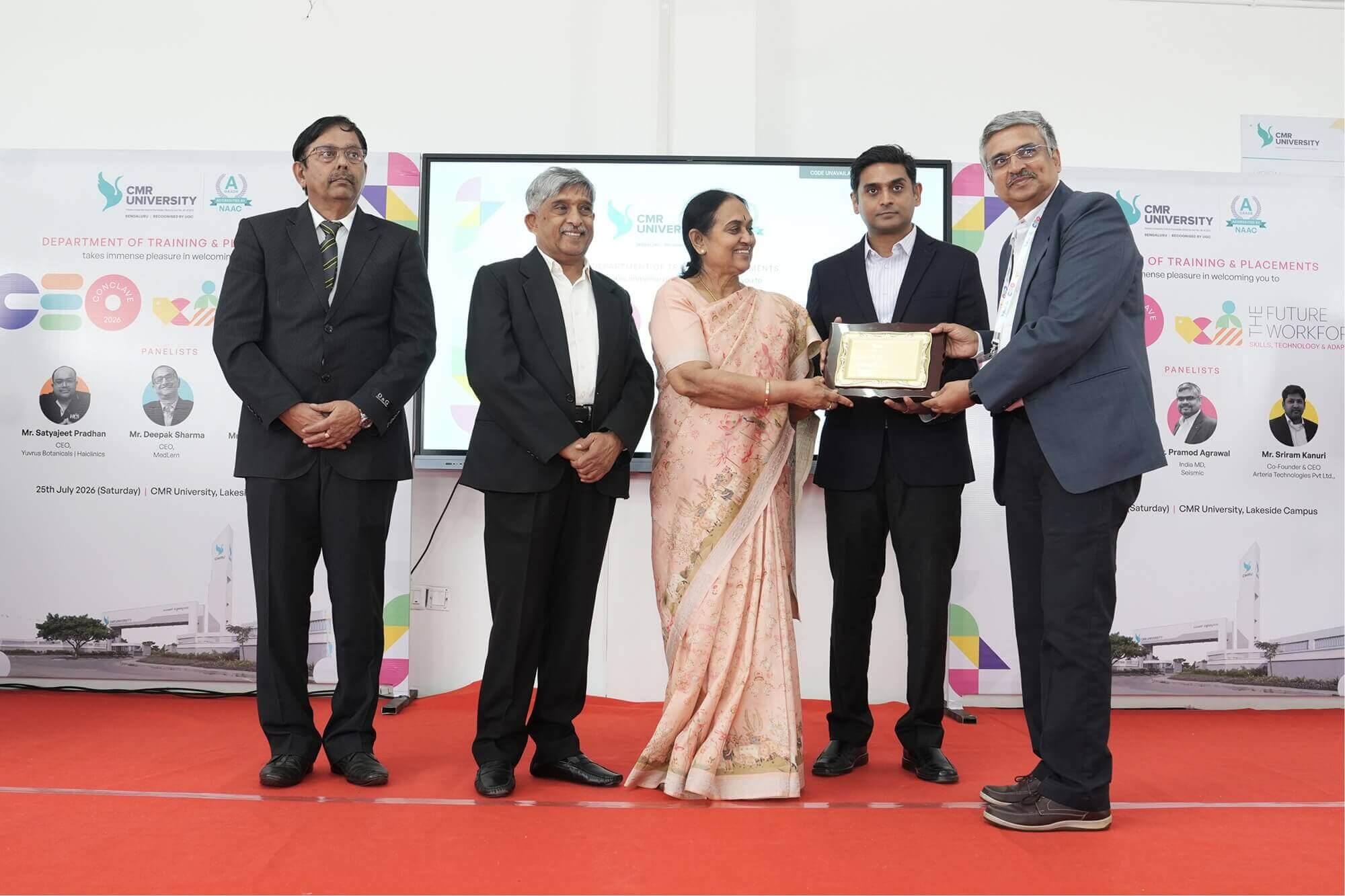
Titled “The Future Workforce: Skills, Technology and Adaptability,” the conclave was organised by CMRU’s Department of Training and Placements, and it lived up to its name. What began as breakfast and networking at 9 am unfolded into a full day of dialogue between six panellists, over thirty delegates from companies including HDFC Bank, Deloitte, Accenture, Cognizant, Wells Fargo and Swiggy and a hall full of students who, for a few hours, got to sit across the table from the people usually found at the top of a hiring pipeline.
A morning that set the tone
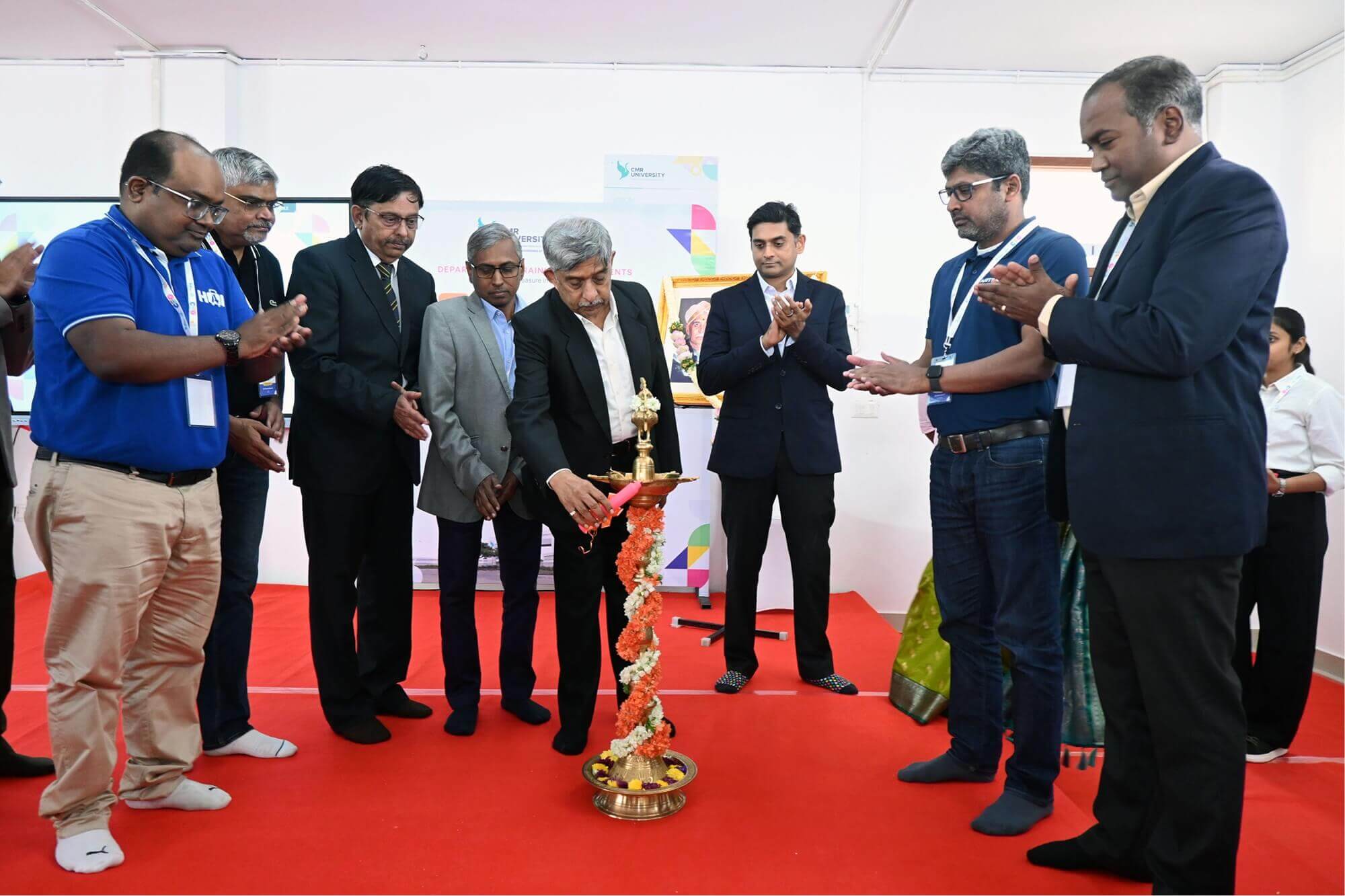
The day opened gently, with a campus tour followed by the lighting of the lamp and an invocation ceremony, before moving into welcome addresses from the university leadership. It was a fitting start for an event that, at its heart, was about connection rather than presentation.
CMRU’s Chairman, Dr. K. C. Ramamurthy, IPS (Retd.), spoke of the conclave as a reflection of the university’s larger commitment to creating meaningful dialogue between academia and industry, noting that preparing students for a world reshaped by artificial intelligence and digital innovation calls for more than academic excellence alone. His rather candid words were an inspiration to many. “We should adapt to the imminent changes, including AI. I’m still ignorant about AI,” he remarked adding, “After listening to the panel, I feel confident about being able to learn it by consulting with professors here. I am thankful to the CEOs and leaders whose guidance and directions we will take to improve continually.”
On the institution’s continuous focus on transformation, he said, “Though we are an established institution, we think like a start-up and we are open to learning and assimilating ideas from everyone and keep growing.”
The Pro Chancellor, Mr. Jaydeep K R Reddy, echoed this from a slightly different angle, describing the event as a rare opportunity for students to learn directly from leaders shaping today’s industries. Beyond understanding emerging trends, he noted that students would gain insight into the mindset, adaptability and problem-solving skills that organisations increasingly look for, and he encouraged them to approach technological change not with uncertainty but with curiosity and resilience.
The conclave also drew a wider circle of university leadership onto the stage. Alongside Chairman Dr. K. C. Ramamurthy and Pro Chancellor Jaydeep K. R. Reddy, the event was graced by Dr. Sabitha Ramamurthy, Chancellor of CMR University; Dr. Tristha Ramamurthy, Provost; Dr. H. B. Raghavendra, Vice Chancellor; Dr. Praveen R. and Dr. Dileep Kumar M., Pro Vice Chancellors; and Dr. K. E. Prakash, Registrar, alongside Directors of the university’s various Schools. Their presence, together with the Schools’ own Directors, underlined that the conclave was treated as a university-wide priority rather than a single department’s initiative.
Inside the conversation
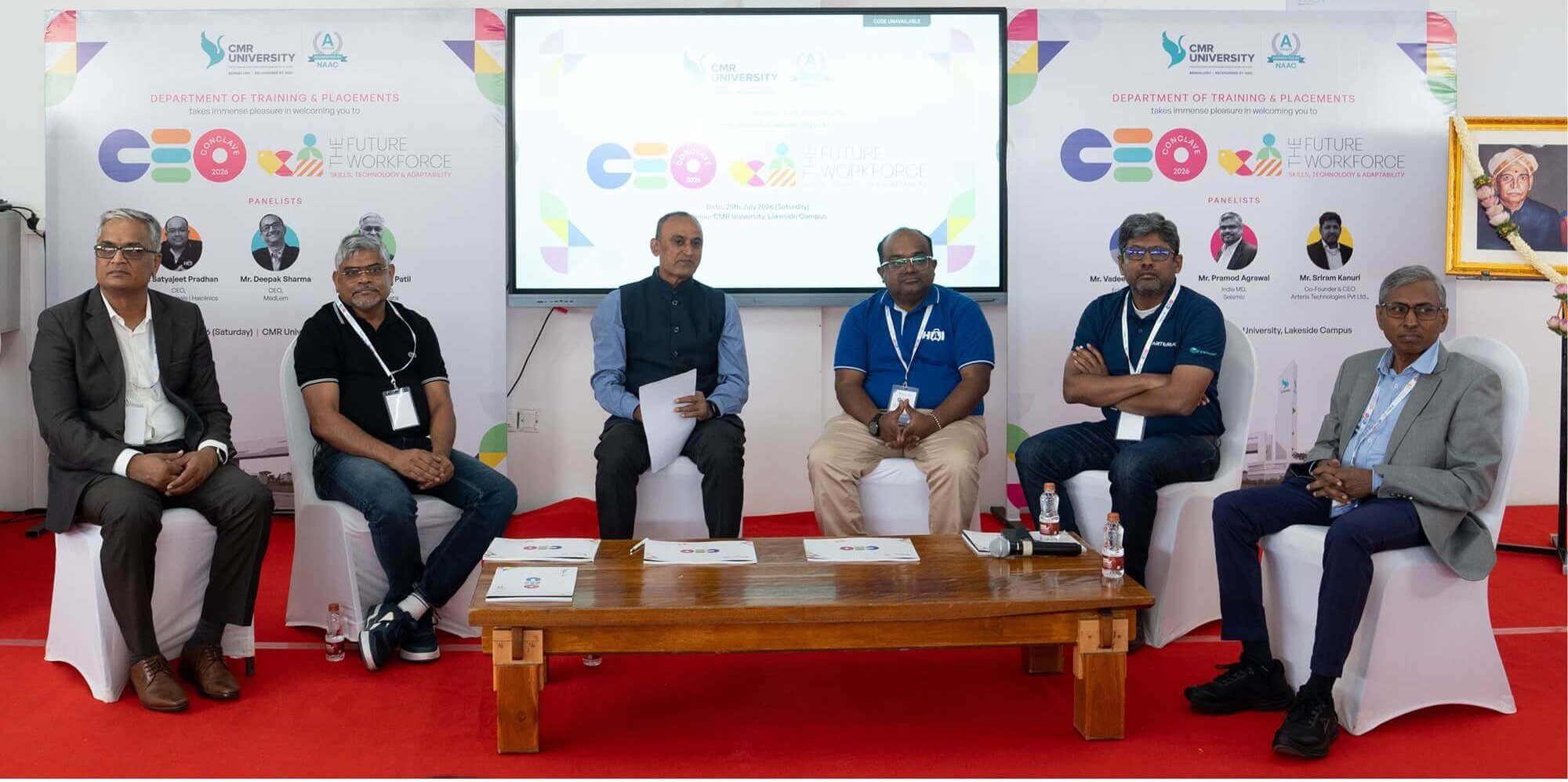
The panel brought together leaders from strikingly different corners of industry. Satyajeet Pradhan of HAI Suitcase Clinics spoke from the perspective of someone who has built accessible healthcare models from scratch. Relating his extraordinarily inspirational tale, he elaborated on the benefits of starting young. “I always wanted to be an entrepreneur. Though I ran away from formal education, I learnt core engineering through YouTube. I sold SIM cards on the streets to corporates. Those skills have helped me to get to where I am today,” he narrated. On the skills that students required to thrive in the future, he stressed on his mantra “SAAI: Skills, adaptability and AI literacy.”
Speaking on the proliferation of artificial intelligence and LLMs, he said, “AI is not going to replace jobs. AI is a collaborator and humans will be the decision-makers. Technology is changing faster than careers. AI will also evolve. In the future, we will need humans to assist the robots to deliver the desired output. AI may aid doctors to give precise clinical outcomes; it can never replace them,” he pointed out. He also outlined communication, critical thinking and learning agility as skills that will redefine the future.
Mr. Brahmanand Patil of VECTOR Informatik, an alumnus of CMR himself, said how manufacturing and automotive companies have been recruiting talented engineers from India. “With connected cars and other emerging technologies, there are plenty of opportunities in the automotive industry both in DevOps/ software and core engineering sides,” he said.
“Knowledge of fundamentals is very important. I know there is immense pressure on students to learn extra academic skills. But core academics is very important,” he emphasised, adding that technology is evolving. “Certifications and parallel learning are also important,” he said, “but the key is how a student evolves, adapts and is fluent in multiple disciplines.”
Mr. Vadeesh Budramane of AlgoShack Technologies dwelled on how adaptability is becoming relevant in a world where degrees and skillsets are becoming obsolete at a faster pace. Pitching Bengaluru as the innovation hub, he said, “A lot is happening in innovation and Bangalore is the place to be. Innovation in the last 30 years vs what’s happening now is different. Knowledge is no longer a skill as it’s available to everyone as it’s becoming democratised,” he elaborated. “Coding per se is no longer a skill. You can be an architect today without having to spend 15 years learning and using the skills,” he added, pointing out how technical writing and coding are being automated completely.
On a parting note, he said, “We are no longer using just Generative AI; today’s conversations are about Agentic AI. My team continues to learn on the job. You need domain knowledge as well as holistic skills.”
Mr Sriram Kanuri of Arteria Technologies echoed his thoughts and continued, “Cross-domain expertise is very important. There seems to be a gap that needs to be plugged. That’s where universities like CMR come in.” Speaking on the developments in his sector, he predicted that the supply chain industry was going to be the backbone of the country. “Resilience is a very important skill. Adaptability and the human angle we bring is very pertinent. It keeps us grounded and open to learning,” he added.
Pramod Agrawal of Seismic spoke on how each industry is transforming. “We need a digital understanding of how the world operates today. We need to create a workforce of the future that is rooted but can leverage digital technology,” he highlighted. “The idea of transferable skills is very real. Even with AI, we are ultimately trying to fulfil human needs. Human desire has no end. If we map out our lives in a sustainable way and find ways of catering to human desires there will be no dearth of jobs,” he noted.
After a formal panel introduction, the discussion moved into an open Q&A session where delegates and panellists interacted with the audience that comprised leaders of other industries and faculty of the university.
The delegate list read like a cross-section of the industries CMRU students are likely to enter. HR and people leaders from Zeta, Britannia and Tally Education sat alongside technology directors from Kyndryl and Emirates Global Aluminium, finance leaders from Wells Fargo and Swiss Re, and founders running everything from edtech to food manufacturing. The presence of recruiting partners such as Oracle, SAP, Bosch, Genpact, Capgemini and Radisson Blu, among others, made the conclave feel less like a one-day event and more like a working preview of where CMRU’s graduates might eventually land.
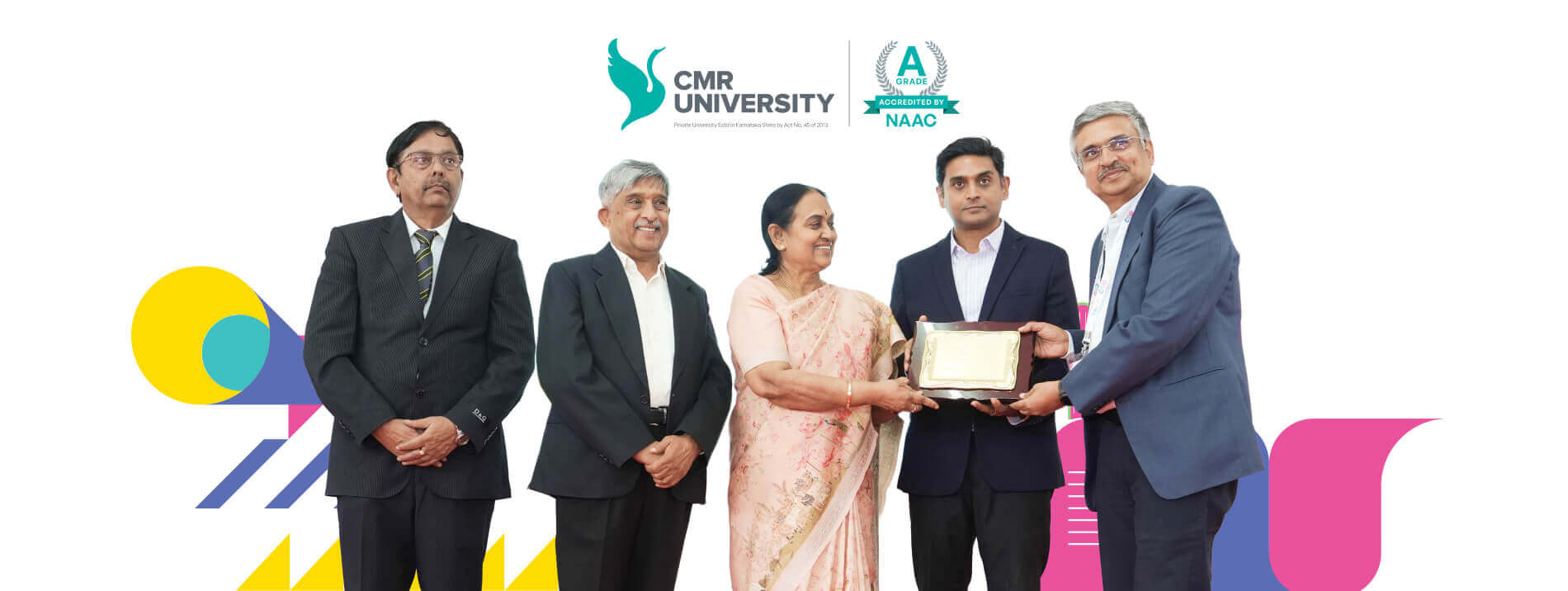
By early afternoon, the formal proceedings gave way to felicitation of the panel members and a presidential address, before the day closed with a cultural programme and the national anthem.
A conversation that arrives at the right moment
Much of the day’s discussion circled back to one theme: artificial intelligence is no longer a distant trend but a present reality shaping hiring, skilling and entire industries. It is a shift CMR University has already begun preparing for directly, with AI and machine learning specialisations now woven into its B.Tech., M.Tech, M.Sc. IT (AI and ML) and MCA (AI and ML) programmes. In that sense, the conclave was not just a conversation about where the workforce is heading. It was an opportunity for students already building those exact skills to hear, first hand, how the leaders hiring for tomorrow are thinking about them today.
Conclaves and industry panels are not new to university calendars, but this one landed at a particularly relevant moment. Conversations about AI reshaping entry-level roles, about the widening gap between what curricula teach and what workplaces expect, have moved from academic conferences into everyday anxiety for students trying to plan a career. Having over twenty CEOs in one room, willing to answer questions without a polished corporate script, offered something a lecture rarely can: proof that even people running large organisations are still figuring out how to navigate this shift, one decision at a time.
For CMR University, the conclave reflects a broader effort to build genuine bridges between the classroom and the boardroom, rather than treating industry interaction as an annual formality. Students who attended left with more than notes. They left with faces, names and, in some cases, direct conversations with people whose companies they may well end up working for.