
Founded in 2013, CMR University is a pioneer in providing industry-focused, future-ready education. With a well-qualified faculty and three campuses across the city, the University’s primary goal is to cultivate a student body that is not only academically inclined but also well-rounded in extracurricular pursuits and broader interests.
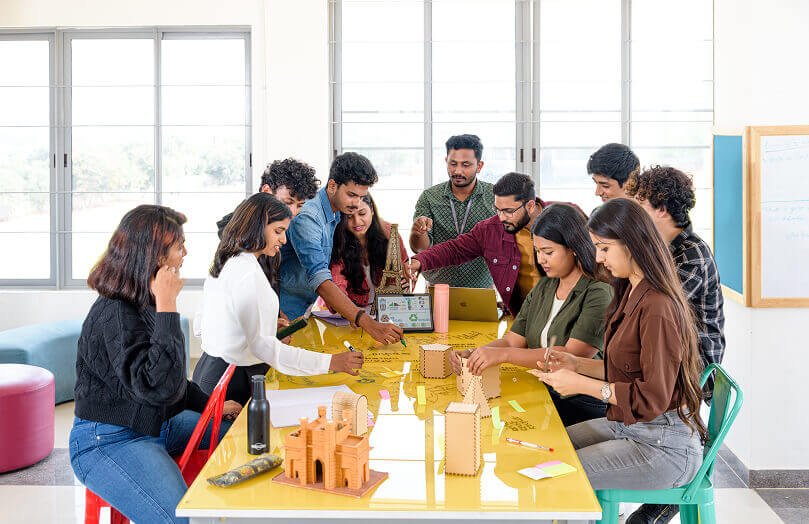
To support this vision, design thinking forms a fundamental component of CMR’s core curriculum. Every student is required to undertake the course, through which they engage with surrounding communities, identify real-world challenges, and develop meaningful, user-centred solutions using hands-on learning and collaborative approaches.
This culture of proactive problem-solving extends into other institutional initiatives, most notably the University’s incubation cell, officially known as the C-Nest. While design thinking equips students with tools for ideation and solution development, the C-Nest enables them to take the next step by transforming ideas into viable start-ups through mentorship, access to resources and exposure to real-world entrepreneurial ecosystems.
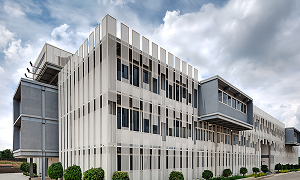
Located at the Lakeside Campus, CMR University’s incubation cell, the C-Nest (Centre for Nurturing Entrepreneurship, Startups and Technology), is a registered Section 8 company created to support student entrepreneurs through mentorship, networking opportunities, hands-on development and experiential industry engagement.
The C-Nest provides access to the mentorship, infrastructure and ecosystem necessary to convert entrepreneurial concepts into market-ready products. Support extends beyond physical facilities to include guidance from industry professionals, exposure to business environments and access to investors, alumni and established entrepreneurial networks.
The C-Nest will span approximately 10,000 sq ft at the Lakeside Campus and is designed to host 10 to 15 start-ups per cohort. As the ecosystem expands, domain-specific cohorts may be launched across Phase 2 and Phase 3 programmes. Initial incubation will focus on IT-domain start-ups, with opportunities to diversify into additional sectors.

Each workstation includes modular desks with built-in storage for start-up teams. Additional storage is available at the central office for directors, administrative staff, the C-Nest Manager and support personnel.
Entrepreneurship at the C-Nest follows a hands-on learning methodology that combines practical experience with structured mentoring and academic foundations. Students gain access to fabrication and prototyping equipment, including 3D printers, enabling teams to test ideas and refine solutions based on market input.
This experiential model is reinforced through mentoring in product design, customer discovery and market research, ensuring that solutions remain practical, commercially viable and relevant to real-world needs.
Throughout their entrepreneurial journey, students progress through the three foundational pillars that guide their start-up development:


The C-Nest fosters entrepreneurial capabilities across multiple business disciplines by nurturing essential competencies, including:
Pitching and presenting ideas effectively to peers and potential investors
Financial planning to promote start-up sustainability
Marketing strategies aligned with clearly defined customer segments
Operations management and project planning for daily business execution
Masterclasses supplement technical training by strengthening team building, leadership and creative problem-solving skills that are essential in real-world entrepreneurial environments.
The incubation journey consists of 4 major phases, where processes within each phase may interlap with the preceding/ succeeding stage.
Students submit their start-up concepts and receive foundational training in idea validation. Initial mentoring begins, and participants are introduced to the broader C-Nest entrepreneurial ecosystem.
Teams design and build functional prototypes or minimum viable products for demonstration to customers and investors. Activities include preparation of pitch decks, financial projections and fundraising plans, participation in investor forums and demo showcases, and exploration of intellectual property protection, including patent application processes.
Masterclasses supplement technical training by strengthening team building, leadership and creative problem-solving skills that are essential in real-world entrepreneurial environments.
The ecosystem offers:
Students seeking entry into the C-Nest must submit a start-up idea for evaluation. Selected teams receive mentorship, resources and structured programme support to progress from early concept development to market-ready ventures.
Through its integrated learning environment and commitment to entrepreneurship, the C-Nest empowers student founders to build enterprises, generate employment and scale innovative solutions for long-term impact.


School of Architecture (SOA)
School of Design (SOD)
School of Engineering & Technology (SOET)
School of Economics & Commerce (SOEC)
School of Management (SOM)
School of Legal Studies (SOLS)
School of Science & Computer Studies (SSCS)
CMR UNIVERSITY ADMIN OFFICE
#2, 3rd 'C' Cross, 6th 'A' Main HRBR Layout, 2nd Block, Kalyana Nagar,Bengaluru 560043, India.
CMRU CITY CAMPUS
LAKESIDE CAMPUS
CMRU OMBR CAMPUS
CMRIT
Andhra Pradesh & Telangana
FOR ADMISSION ENQUIRIES CONTACTK-UGCET Codes
B.Tech Lakeside Campus - E257
B.Arch Lakeside Campus - E245
MBA (OMBR Campus) - B149MB
MBA (City Campus)- B150MB
MBA (Lakeside Campus) - B395MB
MCA (OMBR Campus) - C527MC
MCA (Lakeside Campus)- C521MC
 Optimized by Seraphinite Accelerator