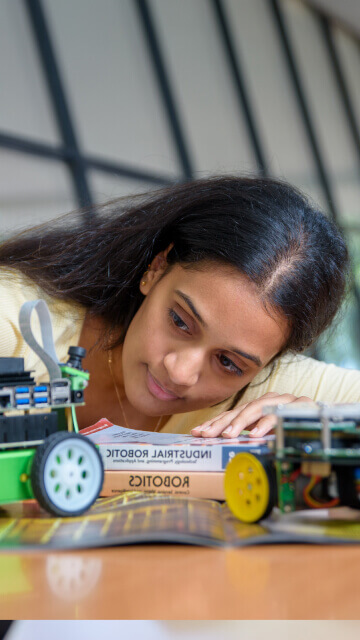


CMR University’s Computer Science & Technology programmes are designed to respond to the dynamic progress from Information to Intelligence Technology. As one of the best universities in Bangalore for computer science, our programme focuses on theoretical learning and application development to equip students with the skills and competencies required to envision and build innovative products.
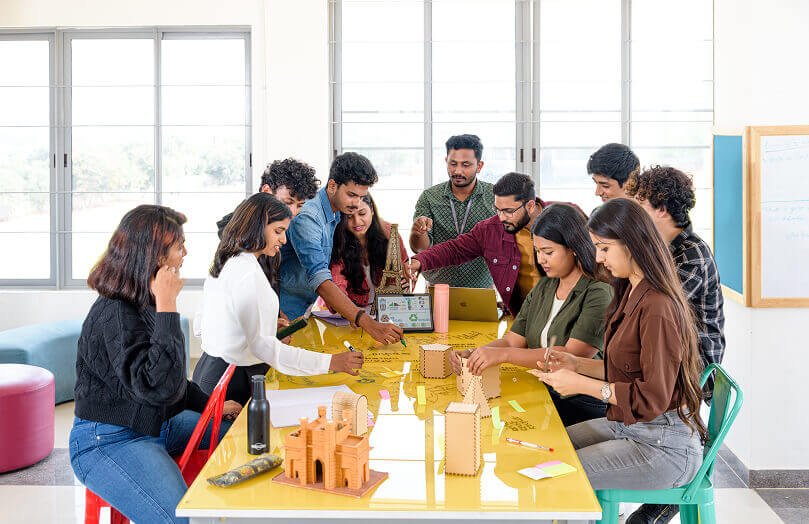
The curriculum includes computer engineering frameworks and entrepreneurship, making it one of the leading computer science programmes in Bangalore. Students develop competencies in critical thinking, problem exploration, and problem-solving with a focus on project-based learning.
4 years
Full-time
₹1,37,500/- per semester
Candidate should have passed the 2nd PUC/12th/Equivalent Exam with a minimum of 45% of marks in Physics and Mathematics along with Chemistry/ Computer Science/Electronics/Information Technology/ Biology/ Informatics Practices/ Biotechnology/ Technical Vocational subject/ Agriculture/ Engineering Graphics/ Business Studies/ Entrepreneurship. (40% for Karnataka reserved category candidates) from a recognized board. Candidates must also qualify in one of the following entrance exams: CET/ COMED-K/JEE/Other state entrance tests /National level entrance test.
OR
Passed D.Voc. stream in the same or allied sector.
At the end of the programme, the student:
The Computer Science programme at CMR University is highly ranked and often compared to the top computer science engineering colleges in Karnataka. Its syllabus for each semester is as follows:





Step 1 – Application Enquiry
On-call guidance with step-by-step expert instructions to complete the application form.
Step 2 – Selection Process
Candidates are shortlisted after document verification, interview, and the CMRUAT entrance exam.
Step 3 – Offer Letter
Offer Letter issued to commence further admission process.
 Rs.1,75,000/- Per semester
  Undergraduate
  4 years
  Lakeside Campus
  Rs. 2,00,000/- Per semester Undergraduate 4 years Lakeside Campus
  Rs.1,75,000/- Per semester Undergraduate 4 years Lakeside Campus
  Rs.1,37,500/- Per semester Undergraduate 4 years Lakeside Campus
  Rs.137,500/- Per semester Undergraduate 4 years Lakeside Campus
  Rs. 1,37,500/- Per semester Undergraduate 4 years Lakeside Campus
  50,000/- Per semester Postgraduate 2 years Lakeside
  55,000/- Per semester Postgraduate 2 years Lakeside
 Four years
Written test and interview
10+2 with Physics, Chemistry, and Mathematics and a minimum of 45% marks. Other equivalent qualifications may also be considered.
Yes, it includes areas such as Virtual Reality & Game-Theoretic Simulation, Mobile App Development, Data Mining, Big Data, Artificial Intelligence, Cryptography, Digital Forensics, Human-Computer Interaction, Augmented & Mixed Reality, and Industrial IoT.
Yes. The CST programme offers hands-on, project-based learning with exposure to entrepreneurial and technological skills. It prepares graduates for placements, higher education, or entrepreneurship.
The CST programme teaches skills in:
Facilities include:
Apply online or offline through the CMR University portal. Shortlisted candidates will be contacted for an interview.
Yes, it is highly in demand due to the rise in AI, big data, and digital transformation technologies.
Yes. The university has a dedicated placement cell offering training in interview skills, soft skills, and leadership development from the first year.
Yes. Practical training and internships are integral to the programme structure.