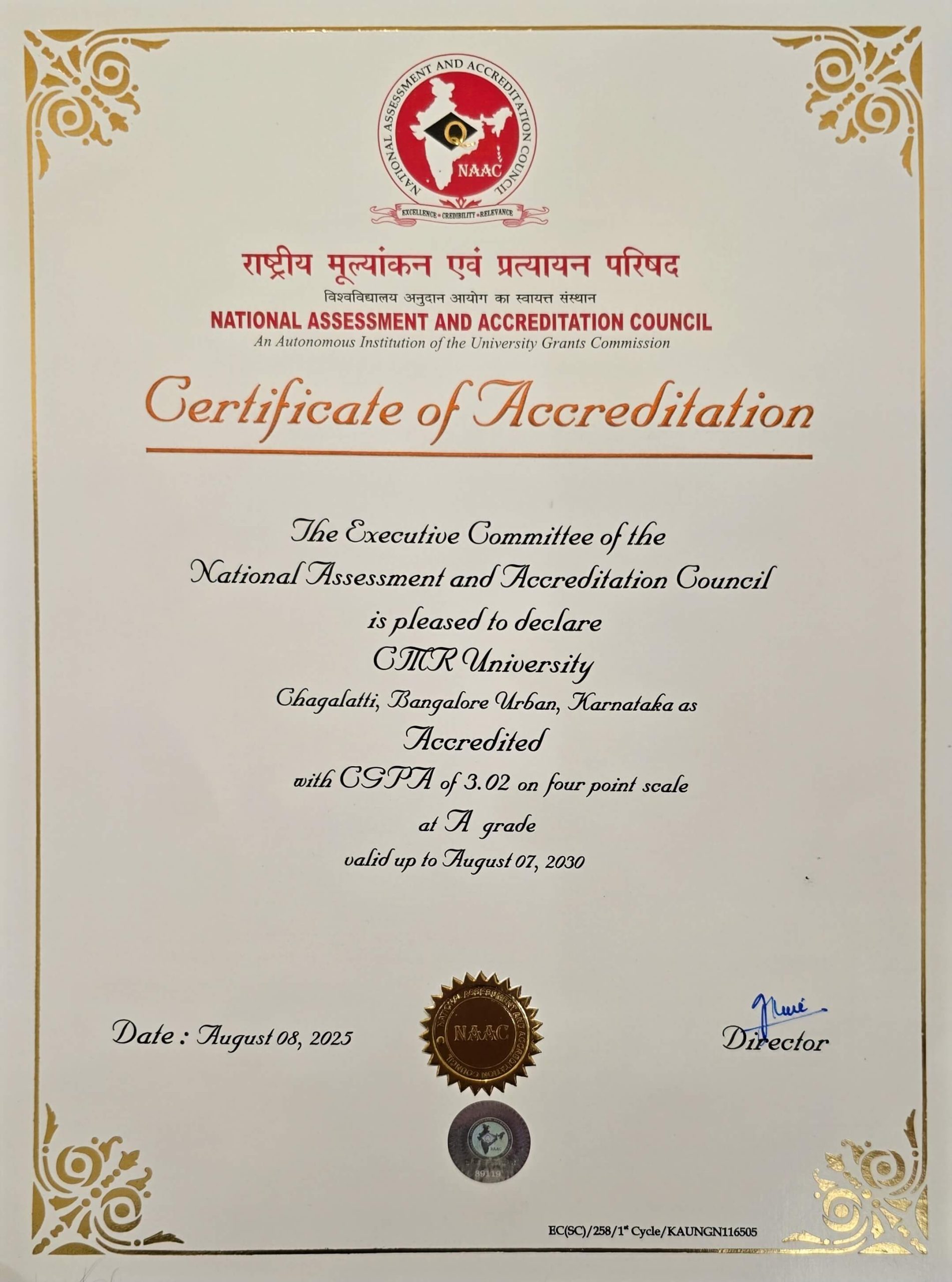
Announcements

Announcements



The BCA in Artificial Intelligence and Machine Learning (AI & ML) programme at the School of Science and Computer Studies (SSCS), CMR University, Bengaluru, is a specialised undergraduate course designed to equip students with advanced technical skills in AI and ML technologies. The programme emphasises hands-on learning through real-time projects, assignments, and industry-relevant case studies, enabling students to build intelligent systems and data-driven solutions.
The curriculum covers key areas such as machine learning models, deep learning, natural language processing, and computer vision, ensuring students are prepared for industry requirements. With a strong foundation in programming languages, data science principles, and algorithm development, students gain expertise in tools like Python and TensorFlow.
Graduates can pursue diverse roles such as AI Engineer, Data Scientist, and Business Intelligence Analyst, catering to the increasing demand for AI and ML professionals across industries. The programme also focuses on industry-relevant skills like data analytics, predictive modelling, and machine learning frameworks, ensuring students are well-equipped to address real-world challenges.
3 years
Full-time
Rs. 67,500/- per semester – OMBR
Rs. 67,500/- per semester – Lakeside
Candidates should have passed in PUC /12th Grade or Equivalent examination in any stream from a recognized board.
The BCA in Artificial Intelligence and Machine Learning (AI & ML) programme at CMR University, Bengaluru, offers promising career prospects in emerging technology domains. The course is designed to equip students with skills in data analytics, predictive modelling, and AI-driven solutions, preparing them for roles in industries such as healthcare, finance, and e-commerce.
Course Objectives:
 Rs.67,500/- Per semester - OMBR
 Undergraduate
  3 Years
  OMBR & Lakeside
  Rs.67,500/- OMBR Per semester Undergraduate 3 years OMBR & Lakeside
  Rs.67,500/- Per semester Undergraduate 3 years OMBR
  Rs.67,500/- Per Semester Undergraduate 3 years OMBR Rs.50,000 Per semester Undergraduate 3 years OMBR Rs.1,00,000 Per semester -OMBR Postgraduate 2 Years OMBR & Lakeside Campus Rs.45000 Per semester Postgraduate 2 Years OMBR