cmr.edu.in Bachelor of Science | Sound Engineering | Programmes at CMR University

Bachelor of Science | Sound Engineering

Scope & Objectives

  • The B.Sc. in Sound Engineering at CMR University is one of the most sought-after programmes for students interested in the media and entertainment industry.
  • The course equips students with in-depth knowledge of different types of sound, how they are produced, and how to creatively utilise them.

  • With the growing demand for sound professionals capable of crafting sound for video content, audio engineering courses in Bangalore are gaining popularity.
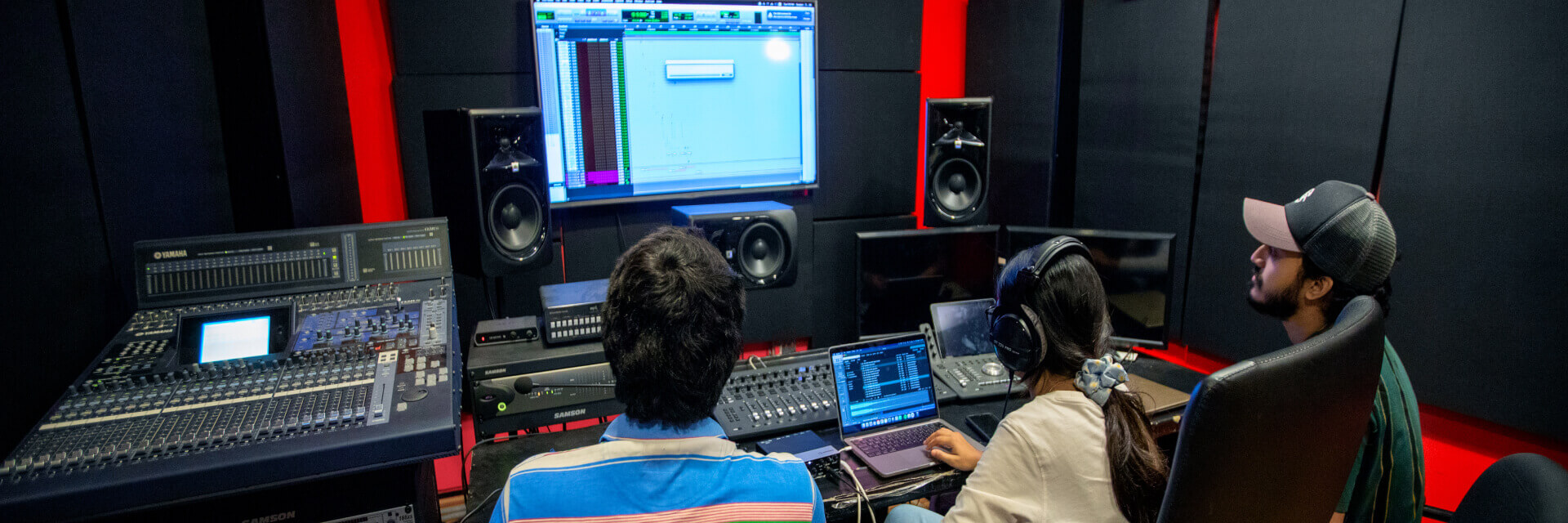
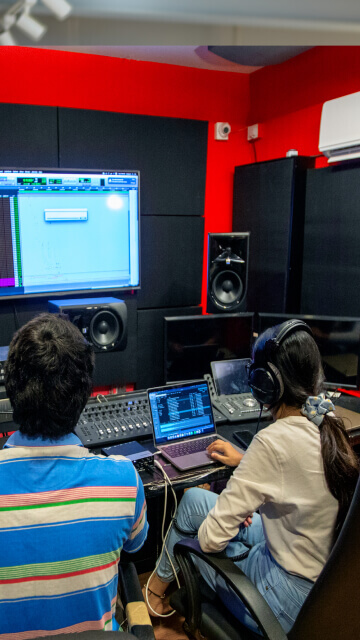
  • CMR University, among the top sound engineering colleges in Karnataka, offers modern facilities for digital and analogue sound mixing.
  • The curriculum and teaching approach prepare students for global careers in the entertainment and media industries.

Programme Structure

Semester I
  • Pre Production
  • Music Theory 1
  • Audio Physics
  • Media History & Equipment
  • Concept Development & Production
  • Project I *

Common Core

  • Design Thinking
  • Creating with AI
  • Community Service Programme – I
Semester II
  • Live Sound & Audio Networking
  • DAW – I [Ableton Live] & Electronic Music Production
  • Acoustics & Decibels
  • Electronics and Digital Audio
  • Project II

Common Core

  • Hindi / Kannada / English
  • Active Communication I
  • Career Preparedness Program-I
  • Community Service Programme – II *
Semester III
  • Location Sound
  • History of Art & Design I
  • Digital Audio Workstation – II – Logic Pro (Practical)
  • Music Theory 2
  • C++ Programming
  • Internship – I †
  • Project III

Common Core

  • Introduction to Philosophical Thoughts
  • Career Preparedness Program – II
  • Community Service Programme – III*
Semester IV
  • History of Art & Design II
  • Film Sound
  • DAW – III Protools 100 (Practical)
  • Post Production
  • Python(Programming)
  • Project IV

Common Core

  • Indian Constitution
  • Career Preparedness Program-III
Semester V
  • Design Management
  • Sound Design
  • Game Audio
  • Digital Audio Workstation – III – Cubase
  • Dolby Atmos & Surround
  • Project V
  • Internship II † (SIP)

Common Core

  • Environment and Sustainability (EAS)
  • Disaster Management
  • Training and placement
Semester VI
  • Graduation Portfolio
  • Exhibition
  • Media Law & Media Business
  • DAW V – Nuendo
  • Capstone

Common Core

  • Indian Traditions: Values and Critical Inquiry
  • Internship – I †
  • Internship II † (SIP)
  • Community Service – I Programme
  • Community Service – II Programme

Programme Assessment

  • Choice-Based Credit System (CBCS): Allows students to choose courses and earn credits based on performance.
  • Grades and GPA: Each course is graded per semester; SGPA and CGPA reflect performance across terms.
  • Prescribed Curriculum: Includes core subjects, labs, and MOOCs such as SWAYAM courses.
  • Auditing Courses: Students may audit courses for additional learning without grade pressure.
  • Evaluation System: Comprises Continuous Internal Evaluation (CIE) and Semester End Examination (SEE), each contributing 50%.
  • Assessment Methods: Assignments, quizzes, group discussions, case studies, presentations, and practicals.
  • Semester End Examination: Conducted for all courses unless exempted due to continuous evaluation.
  • Makeup Examinations: Offered for students who do not pass the SEE.

Programme Outcome

  • Students become proficient in 7.1 surround mixing using industry-standard equipment and software.
  • By the end of the programme, students are industry-ready professionals in the sound engineering field.

Course Outcomes Visit

What expertise do you gain?
  • Audio recording techniques and equipment
  • Digital audio workstations and editing software
  • Acoustics and sound design principles
  • Mixing and mastering audio
  • Live sound engineering and studio production

Career Opportunities

  • 01
    Sound Engineer
  • 02
    Audio Mixer
  • 03
    Sound Designer
  • 04
    Music Producer
  • 05
    Foley Artist
  • 06
    Audio Post-production Engineer

FAQs

Graduates may pursue higher studies in sound engineering or explore opportunities in the media, music, entertainment, and post-production industries.

Candidates must have passed the PUC / 12th equivalent examination with a minimum aggregate of 50%.

No. The course begins with foundational concepts, so prior science or music knowledge is not mandatory.

Register online via CMRU’s portal. Submit the form online or in person. A non-refundable registration fee must be paid.

Yes. CMRU provides 100% placement assistance and internship opportunities beginning from the second semester.

ACCP AY(2025-26)