With the inauguration of advanced Sound and VFX laboratories, CMR University strengthens its commitment to industry-aligned learning, immersive creativity, and practice-led education at the School of Design.
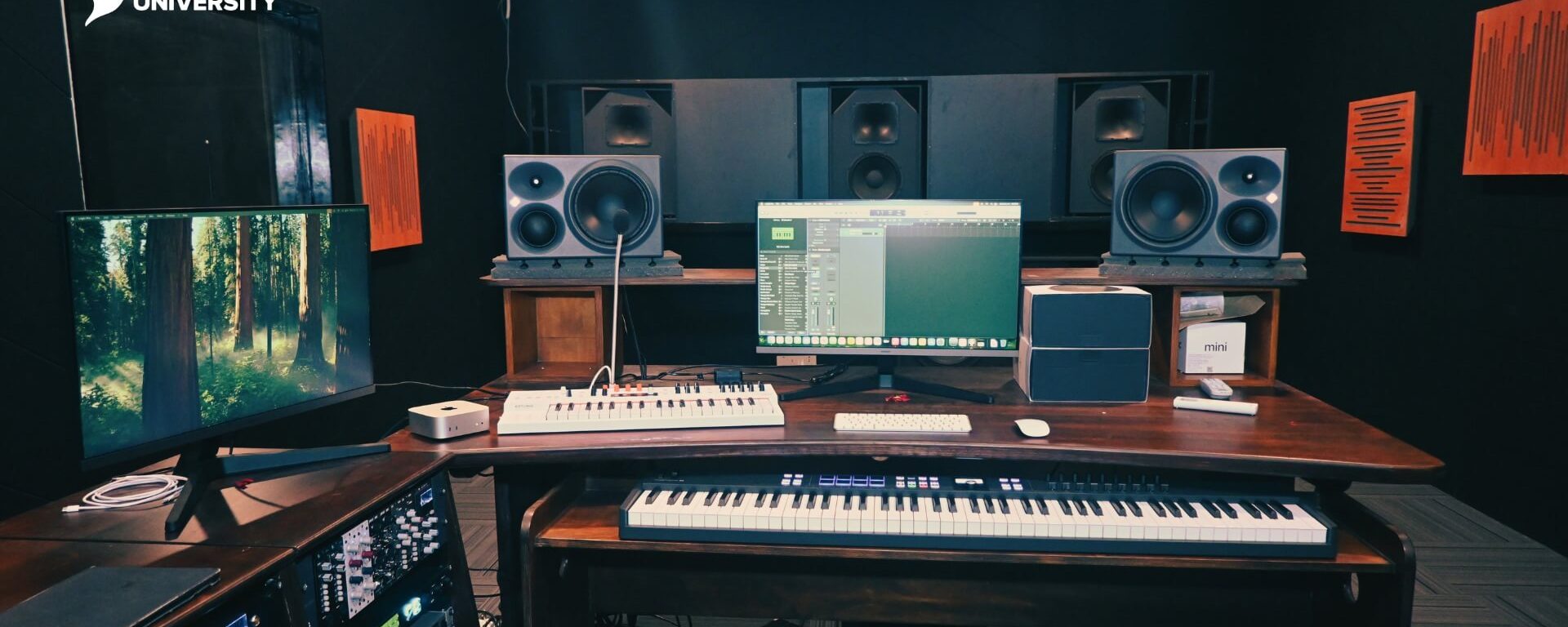
At CMR University, learning is shaped by a simple belief: education must prepare students for life beyond just a career. Rooted in its vision to ‘nurture creative thinkers who will drive positive change,’ 31 December 2025 marked another significant step in that direction. Two new creative spaces, a dedicated Sound Engineering Lab anchored by a Dolby Atmos 7.1.4 Mixing Suite and a Chroma Key Lab for Visual Effects and Animation, were inaugurated at the School of Design. Together, these labs reflect a clear intent: learning shaped by real tools, real workflows, and real responsibility, where ideas meet creativity and purpose.
Speaking at the inauguration, Sunil Gandhi, faculty member at the School of Design, summed it up aptly: “This is the kind of facility I once wished for as a student.” Today’s learners no longer need to imagine industry conditions, they work within them. From object-based immersive audio systems to production-ready visual environments, the labs mirror the standards and expectations of professional studios worldwide.
Core audio interface: a leap in audio creation
With the Dolby Atmos 7.1.4 system now live, CMR University reinforces its commitment to audio excellence, innovation in creative technologies, and industry relevance. The facility equips a new generation of sound professionals with the tools and expertise required to thrive in an immersive audio ecosystem that is rapidly becoming a global standard across cinema, OTT platforms, gaming, live installations, and experiential media.
At the sonic heart of the Sound Engineering Lab is the Lynx Aurora Core Audio Interface, which forms the foundation of all recording, mixing, and playback workflows. Known for its ultra-low noise and distortion, the Lynx Aurora delivers precision A/D and D/A conversion with industry-renowned clocking and stability. Its flexible input–output architecture supports multi-format workflows, making it ideal for Dolby Atmos production, multitrack recording, and high-end mixing sessions. Trusted in advanced studios globally, it ensures accuracy, transparency, and consistency in sound reproduction.
Premium 500-series preamps and analogue processing
To complement digital precision with analogue character, the studio features a carefully curated 500-series preamp and processing rack that offers tonal depth, warmth, and dynamic control.
The Lindell Audio 500 Series preamps are known for their smooth, musical gain structure, delivering clarity and headroom for vocals and instruments. The API 512c brings fast transient response and punch, making it a preferred choice for drums, bass, guitars, and other dynamic sources. The Neve 511 adds classic Neve warmth and harmonic richness, enhancing vocals and acoustic recordings with depth and colour.
Further expanding tonal flexibility, the Camden 500 offers a British-flavoured character with a defined midrange presence, well suited to voice and general tracking applications. The SSL VHD+ (Variable Harmonic Drive) introduces controllable saturation, from subtle warmth to bold analogue drive—injecting energy and character into recordings.
Signature outboard gear for professional mixing and finishing
The studio’s outboard processing chain mirrors professional mix and mastering environments. The SSL Stereo Bus Compressor, renowned for its ability to “glue” mixes together, enhances cohesion and punch across stereo mixes. The SSL Fusion functions as a creative stereo analogue processor, offering stereo imaging control, saturation, air enhancement, and low-end focus, adding a final layer of polish comparable to high-end mastering chains.
Adding further depth and tonal character, the Tegeler Audio Creme provides German-engineered tube summing and coloration, delivering smoothness and dimensionality ideal for stereo processing and tonal enhancement.
Microphone collection: precision across sources
The lab’s microphone arsenal supports a wide range of recording scenarios, from studio vocals to location audio and ensemble recording.
Large-diaphragm condensers include the Neumann U87, a global studio standard known for its balanced frequency response and richness, and the Neumann TLM 103, prized for its low self-noise and clarity in vocal and dialogue capture. The versatile AKG C414, with multiple polar patterns, supports vocals, instruments, and overhead applications.
For detailed acoustic work, the Neumann KM 184 small-diaphragm condenser delivers accurate and transparent capture. Dynamic and speciality microphones include the Shure Beta 91A for kick drums and low-frequency sources, alongside industry staples Shure SM57 and SM58, trusted for instrument tracking and robust vocal performance.
Shotgun and drum capture capabilities are supported by the RØDE NTG series, ideal for location audio and ADR, and the Sennheiser E900 drum microphone set, designed to handle high sound pressure levels with precise transient response.
Monitoring and immersive playback
Critical listening and spatial accuracy are enabled through Neumann KH 310 studio monitors paired with a KH 750 subwoofer, delivering reference-grade monitoring with precise frequency balance and reliable translation. These monitors support detailed evaluation during mixing and post-production.
Completing the immersive ecosystem is the QSC 7.1.4 Dolby Atmos cinema speaker system, comprising seven main channels, one low-frequency channel, and four height channels. Fully calibrated for Dolby Atmos workflows, the system delivers accurate three-dimensional sound staging essential for immersive music, films, and OTT content.
What changes inside the classroom?
Hands-on practice replaces hesitation, building confidence over time. Students train on the same tools used in professional studios and post-production houses, allowing the transition from coursework to live projects to feel seamless. Familiarity replaces guesswork. By the end of the three-year programme, students understand not only the craft of sound and visuals, but also signal flow, calibration, acoustics, workflow precision, and the production standards demanded by the industry.
The vision extends further. With these facilities in place, the School of Design is opening its doors to live industry projects, including post-production and sound work for feature films, OTT content, advertising, and immersive media. Students move beyond observation to participation, working within live production environments and learning through real deadlines and responsibility.
This momentum has been sustained by the Sound Engineering programme at CMRU since 2016. Alumni now working across the media and entertainment industry return with projects of their own, closing the loop between learning and practice. It is a quiet yet powerful cycle: students learn, graduates lead, and the work comes back home.
With these new labs, the School of Design reinforces a belief that defines CMR University: learning accelerates when students are trusted with the right tools and real responsibility. Creativity sharpens. Technical confidence deepens. Careers take shape sooner.
And sometimes, the best way forward is simple, build the space you once wished for, and let the next generation take it further.